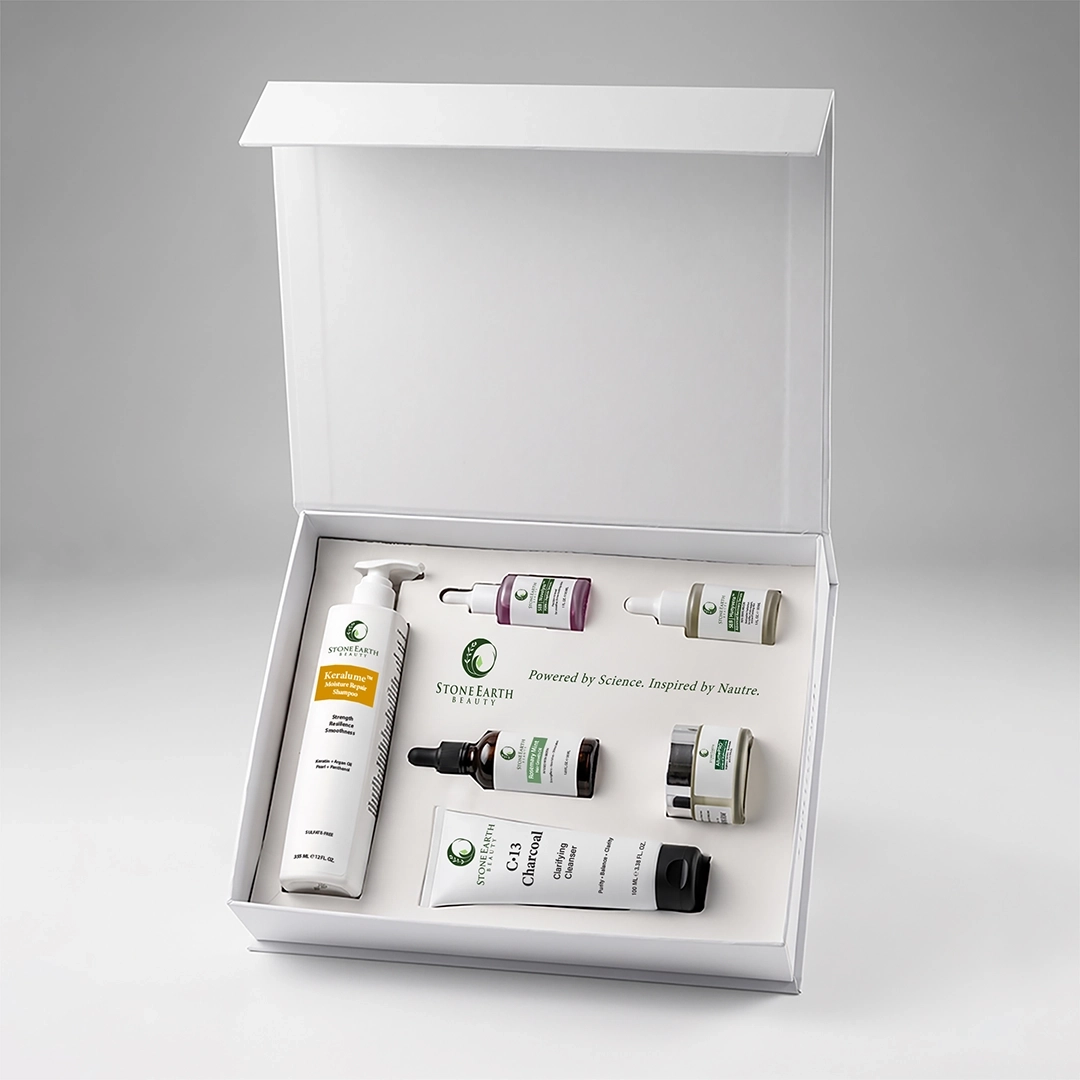


Keralume™ Shampoo
Moisture Repair Shampoo
₨ 1,699.00
Your cart is empty
Add some products to get started.

HOW DOES KERATIN BENEFIT YOUR HAIR?
Hydrolyzed Keratin helps reinforce weakened, damage-prone strands while smoothing roughness and improving manageability. It is especially valued in restorative haircare for helping hair feel stronger, more resilient and visibly polished.
Known for: Strengthening
Also supports: Smoothing
Keratin is the structural protein that gives hair much of its strength and durability. In cosmetic formulas, it is used as Hydrolyzed Keratin—keratin that has been broken into smaller peptide fragments so it can disperse within the formula and interact more effectively with the hair fiber.

Damage from heat, chemical processing and environmental exposure can erode the cuticle and weaken the hair’s internal protein structure. Hydrolyzed Keratin works at different levels according to the size of its peptides: smaller and medium-sized fragments can penetrate into damaged areas of the cortex, while larger fragments deposit along the cuticle to form a reinforcing protein film. This combination helps improve the strand’s resistance to breakage while creating a smoother, more uniform surface that looks healthier and feels easier to manage.
The word keratin first appeared in scientific literature around 1850 to describe the resilient material found in hard biological tissues such as horns, hooves and hair. As cosmetic processing advanced, hydrolysis made it possible to transform keratin into smaller, formula-compatible fragments, helping establish Hydrolyzed Keratin as a widely used hair-conditioning ingredient.
Keratin is a naturally occurring protein found in hair, wool, feathers, nails and other resilient animal structures. Cosmetic-grade Hydrolyzed Keratin is commonly produced from sources such as sheep’s wool, which is purified and treated through controlled acidic, alkaline or enzymatic hydrolysis to create peptides of a selected molecular size.
Hydrolyzed Keratin is not one uniform-sized ingredient. Its peptide fragments can vary considerably in molecular weight—and their size helps determine how they behave. Smaller fragments can travel more deeply into damaged hair, while larger ones remain closer to the surface to help reinforce and smooth the cuticle.
Moisture Repair Shampoo
₨ 1,699.00


Silken Repair Hair Mask
₨ 1,699.00


Hair Finishing Serum
₨ 1,199.00